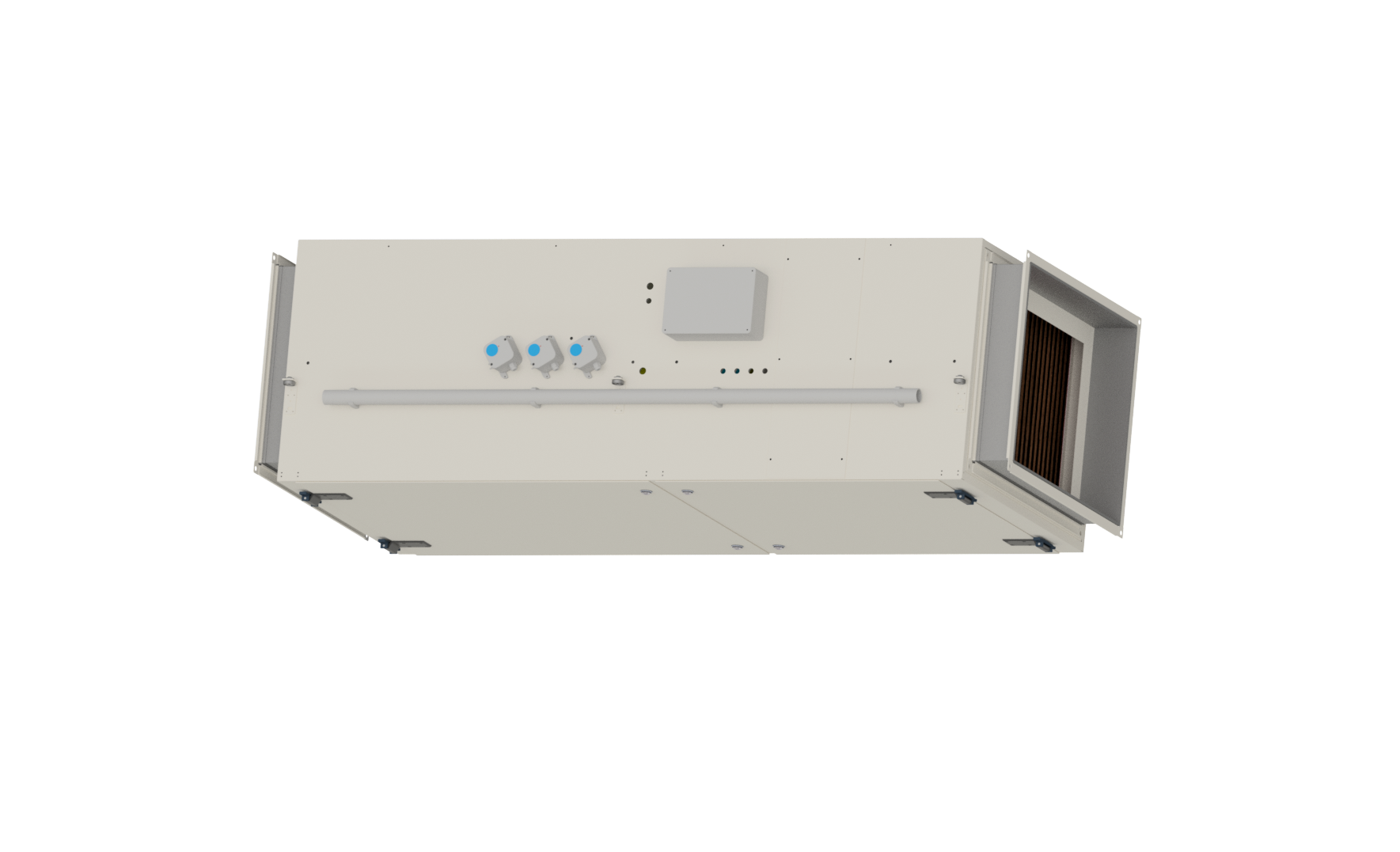
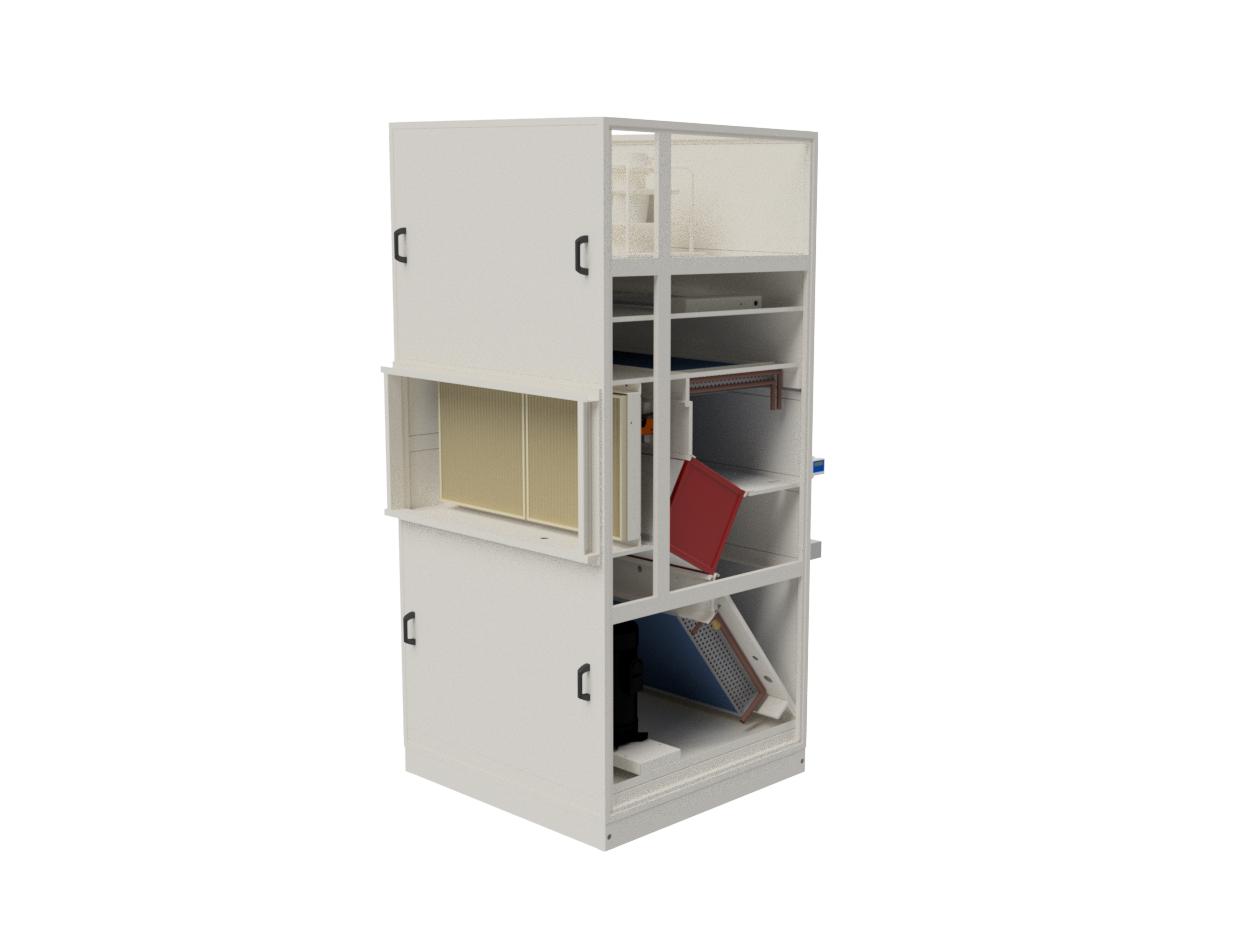
Pool Line Air Handling Units
Ventilation and Air Handling Units for Swimming Pool Dehumidification
Swimming pools place special demands on indoor air management systems.
High humidity loads must be reliably removed, comfortable indoor air conditions maintained, and the building and its structure permanently protected from excessive moisture. At the same time, due to high temperatures and long operating hours, swimming pool climate control is one of the most energy-intensive applications in HVAC.
Pool Line was developed specifically to meet these requirements. The HVAC units combine dehumidification, heat recovery, and demand-based airflow in a system tailored to the specific application. Optionally, an integrated heat pump as well as the necessary measurement, control, and regulation technology can be included as part of the unit. HANSA can supply the entire range of required measurement, control, and regulation technology. With etaSmart, Pool Line also benefits from predictive, model-based control that continuously optimizes system operation while taking energy consumption and operating costs into account.
The P, PGS, and GS series offer various unit designs for airflow rates up to 50,000 m³/h. Higher airflow and dehumidification capacities can be customized for individual projects based on specific conditions.
More on Swimming Pool Climate Control
From the basics of dehumidification through energy efficiency and control to specific applications and case studies: On our Bäder Klima website, you’ll find further information on the planning and operation of HVAC systems for swimming pools:

Pool Line at a Glance
| Feature | Pool Line HVAC Units |
|---|---|
| Unit Concept | Air handling units for dehumidification, ventilation, and air conditioning of swimming pools |
| Series | Pool Line P and PGS in standard sizes, Pool Line GS configurable for specific projects |
| Airflow Capacity | Up to 50,000 m³/h; higher airflow and dehumidification capacities available on a project-by-project basis |
| Energy recovery | Double-plate or counterflow plate heat exchangers, optionally supported by an integrated heat pump |
| Heat pump | Optionally integrable and freely controllable |
| Corrosion protection | Materials and components selected for swimming pool use; housing coating up to C5-H |
| Control | HANSA MSR/DDC technology |
| Operational optimization | Optional etaSmart for predictive, model-based control |
| Monitoring and remote access | etaConnect and etaVisu |
| Installation | Indoor installation, outdoor installation, or rooftop control center |
Pool Line Series – Designed to Suit Your Pool's Size and Purpose
Pool Line offers a variety of unit designs for dehumidification and climate control in swimming pools.
The P and PGS series cover specific performance ranges with tailored unit designs. Pool Line GS, in addition, offers significantly greater flexibility in terms of dimensions, airflow capacity, components, and functions, and is customized for each specific project to meet its unique requirements.
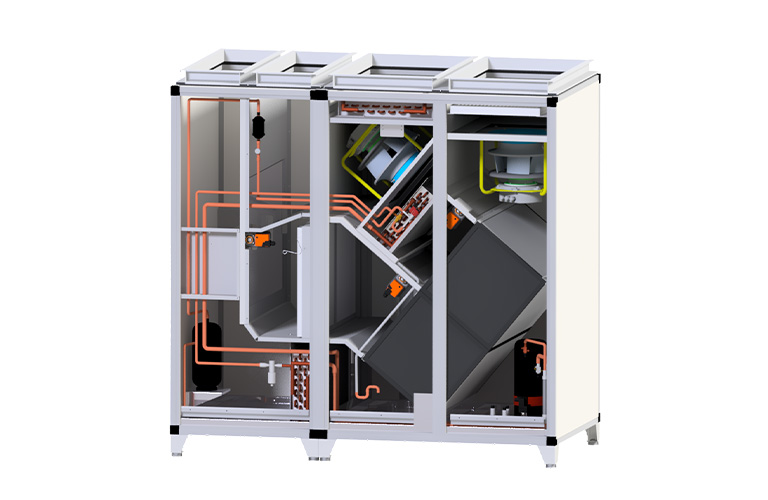
Pool Line P is the compact solution for dehumidification and climate control in smaller swimming pools. With models P-015, P-023, and P-034, the series covers nominal air flow rates ranging from 1,500 to 3,400 m³/h. The units operate with a double-plate heat exchanger and are optionally available with a freely adjustable heat pump.
Depending on usage and evaporation rates, the Pool Line P is suitable, for example, for private swimming pools with water surfaces up to approximately 105 m², indoor pools up to 74 m², recreational pools up to 54 m², wave pools up to 44 m², and therapeutic pools up to 25 m².
Typical Water Areas and Equipment Sizes
| Bathroom Type | P-015 | P-023 | P-034 |
|---|---|---|---|
| Private Bath | 44 m² | 67 m² | 105 m² |
| Indoor pool | 33 m² | 51 m² | 74 m² |
| Recreational pool | 24 m² | 37 m² | 54 m² |
| Wave pool | 19 m² | 29 m² | 44 m² |
| Therapy pool | 11 m² | 16 m² | 25 m² |
| Nominal flow rate | 1,500 m³/h | 2,300 m³/h | 3,400 m³/h |
| Dehumidification capacity | 9.7 kg/h | 14.9 kg/h | 22 kg/h |
Guideline values: The specified water surface areas and dehumidification capacities are based on VDI 2089 at a water temperature of 28 °C and room air conditions of 30 °C / 54% relative humidity, and refer to the water surface.
Pool Line P at a Glance:
- Air flow rates up to 3,400 m³/h
- Compact design
- Double-plate heat exchanger
- Demand-controlled fresh air/recirculated air operation
- Integrated heat pump (optional)
- Split design available for difficult installation paths
- Corrosion protection suitable for swimming pools
- HANSA control technology
Pool Line P System Visualization - Click it!
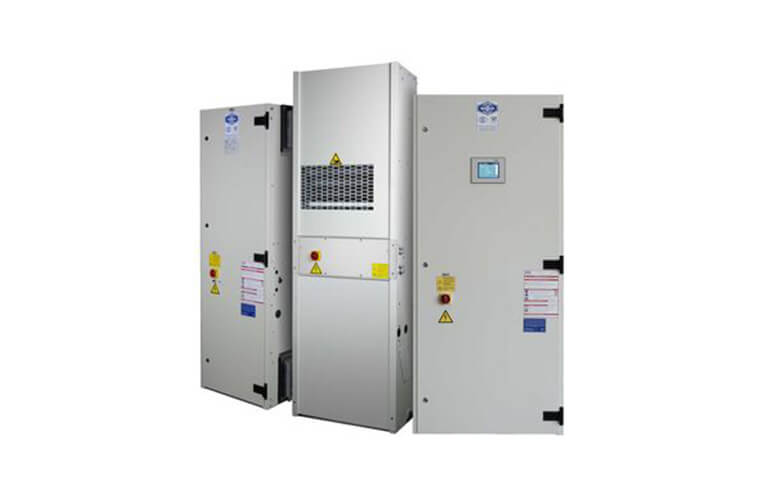
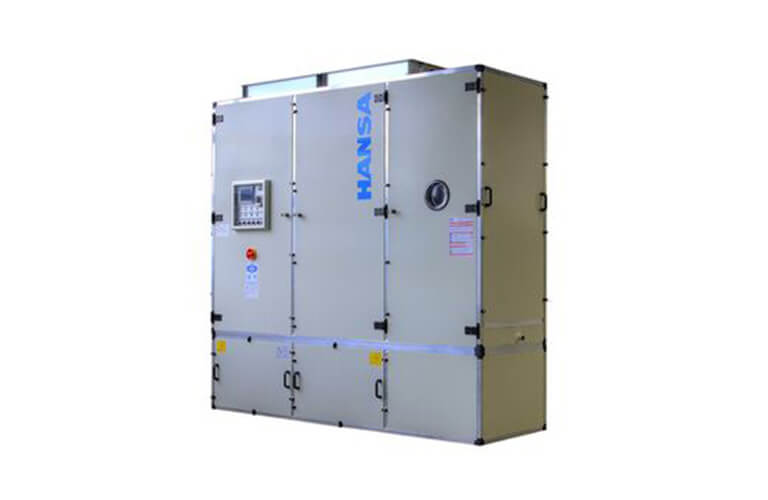
Pool Line PGS expands the Pool Line concept for medium-sized swimming pools and higher dehumidification capacities.
With the PGS-040, PGS-050, PGS-060, and PGS-080 models, the series covers nominal air flow rates from 4,000 to 8,000 m³/h.
The units combine demand-based swimming pool dehumidification with heat recovery and can optionally be equipped with an integrated, freely adjustable heat pump. This provides additional support for dehumidification and allows the recovered energy to be utilized within the system.
Depending on usage and evaporation rates, the Pool Line PGS is suitable, for example, for private swimming pools with water surfaces up to approximately 216 m² and indoor pools up to approximately 166 m². Recreational, wave, and therapeutic pools can also be climate-controlled and dehumidified with Pool Line PGS within the corresponding performance ranges.
Typical Water Areas and Equipment Sizes
| Pool Type | PGS-040 | PGS-050 | PGS-060 | PGS-080 |
|---|---|---|---|---|
| Private bathroom | 108 m² | 135 m² | 162 m² | 216 m² |
| Indoor pool | 83 m² | 104 m² | 125 m² | 166 m² |
| Recreational pool | 61 m² | 76 m² | 91 m² | 121 m² |
| Wave Pool | 49 m² | 61 m² | 73 m² | 97 m² |
| Therapy Pool | 28 m² | 35 m² | 42 m² | 56 m² |
| Nominal flow rate | 4,000 m³/h | 5,000 m³/h | 6,000 m³/h | 8,000 m³/h |
| Dehumidification capacity | 26 kg/h | 32 kg/h | 39 kg/h | 52 kg/h |
Guideline values: The specified water surface areas and dehumidification capacities are based on VDI 2089 at a water temperature of 28 °C and room air conditions of 30 °C / 54% relative humidity, and refer to the water surface area. The dehumidification capacity is specified according to VDI 2089 at the rated airflow. The dehumidification capacity is specified according to VDI 2089 at the rated airflow.
Pool Line PGS at a Glance:
- 4,000 to 8,000 m³/h nominal airflow
- For medium-sized swimming pools and correspondingly higher dehumidification capacities
- Efficient heat recovery via counterflow heat exchangers
- Demand-controlled fresh air/recirculated air operation for dehumidification
- Integrated, freely adjustable heat pump (optional)
- Heat recovery from the dehumidification process
- Corrosion protection designed for the swimming pool environment
- HANSA MSR/DDC control, optionally with etaSmart
- Various unit configurations to suit installation and setup requirements
Pool Line PGS Operational Visualization - Click it!
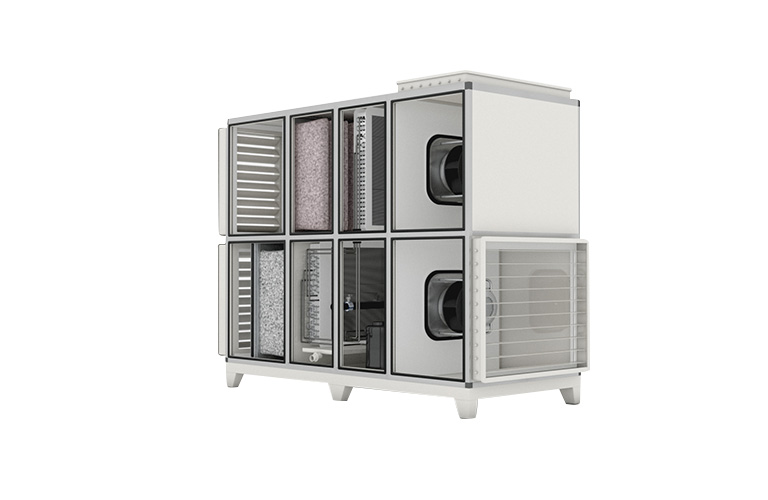
Pool Line GS is the flexibly configurable solution for larger and more demanding swimming pools.
Unit dimensions, airflow capacity, and features are designed on a project-by-project basis according to the specific dehumidification requirements as well as the structural and technical constraints.
The GS sizes shown in the catalog represent typical models and performance ranges. They do not constitute a rigid model grid. This allows Pool Line GS to be adapted to requirements that fall between or outside the standard values shown.
Heat recovery is achieved via a counterflow plate heat exchanger. Optionally, an integrated, freely controllable heat pump can enable further utilization of the heat available in the process. Pool Line GS thus combines high air handling and dehumidification capacities with the design flexibility of custom-engineered HANSA air handling units.
Examples of typical water areas and performance ranges:
| Bath Type | GS-9 | GS-16 | GS-23 | GS-35 |
|---|---|---|---|---|
| Private bathroom | 260 m² | 470 m² | 670 m² | 1,020 m² |
| Indoor pool | 200 m² | 350 m² | 510 m² | 770 m² |
| Recreational pool | 142 m² | 253 m² | 365 m² | 555 m² |
| Wave Pool | 110 m² | 200 m² | 290 m² | 440 m² |
| Therapy pool | 64 m² | 114 m² | 164 m² | 250 m² |
| Nominal flow rate | 9,000 m³/h | 16,000 m³/h | 23,000 m³/h | 35,000 m³/h |
| Dehumidification capacity | 58 kg/h | 103 kg/h | 149 kg/h | 226 kg/h |
Guideline values: The specified water surface areas and dehumidification capacities are based on VDI 2089 at a water temperature of 28 °C and room air conditions of 30 °C / 54% relative humidity, and refer to the water surface area. Dehumidification capacity is specified according to VDI 2089 at the rated airflow rate.
Pool Line GS is designed on a project-by-project basis. The sizes shown represent typical configurations and performance ranges. Additional intermediate sizes are listed in the catalog; furthermore, units can be individually configured to meet specific project requirements.
Additional typical models and technical specifications can be found in the Pool Line catalog.
Pool Line GS at a Glance:
- Project-specific configurable swimming pool HVAC units
- Typical models up to 50,000 m³/h
- Higher air handling and dehumidification capacities available on a project-specific basis
- Heat recovery via counterflow plate heat exchangers
- Demand-controlled fresh air/recirculated air operation
- Integrated, freely adjustable heat pump available as an option
- Custom unit dimensions and features tailored to the installation situation
- Corrosion protection designed for swimming pool environments
- HANSA MSR/DDC control, optionally with etaSmart
- Indoor and outdoor installation depending on project requirements
Pool Line GS System Visualization - Click it!
Why choose Pool Line air handling units from HANSA?
Designed for the unique conditions found in swimming pools
Swimming pool air places high demands on materials and construction. That is why Pool Line is not simply a conventional air handling unit with a dehumidification function. The housing, components, heat exchangers, and fans are specifically designed for the warm, humid, and corrosive swimming pool environment. Here are the details:
- Enclosure panels with corrosion protection up to C5-H
- Anodized ALMg3 aluminum enclosure frame
- Fans with enhanced corrosion protection
- Epoxy-coated finned heat exchanger fins
- Powder-coated components manufactured in-house by HANSA
- Internally sealed joints
- Various housing colors are available
Recover Energy Instead of Letting It Go to Waste
Swimming pools require large amounts of heat and electrical energy year-round. Pool Line therefore combines demand-based dehumidification with efficient heat recovery. Optionally, a freely adjustable heat pump can be integrated to harness additional energy from the dehumidification process within the system.
Depending on the system design, excess heat can be used for water heating via a fresh water or pool water condenser.
etaSmart – Optimize Before Energy Is Consumed
With etaSmart, Pool Line can be expanded to include model-based, predictive control. Instead of reacting solely to current measurement values, the control system proactively takes into account the behavior of the building and the HVAC system and optimizes operation in terms of energy demand and comfort.
Designed for hygiene and operational reliability in accordance with VDI 6022
Reliable dehumidification not only protects the building structure but also reduces the risk of condensation and mold growth. At the same time, Pool Line is designed for easy access and cleanability and can be configured to meet the hygienic requirements for HVAC systems.
Equipment, Control Systems, and Service from a Single Source
HANSA not only develops and manufactures the HVAC unit but also the associated measurement, control, and DDC technology—even in single-unit production. The units can be delivered fully wired and ready for operation, installed in collaboration with the system integrator, and subsequently commissioned by HANSA.
Remote access is possible via etaConnect, while etaVisu visualizes operating data and makes it available for analysis and optimization. Unit documentation is also available digitally in the customer portal.
Pool Line combines swimming pool dehumidification, heat recovery, corrosion protection, and intelligent control into a comprehensive system—tailored to the pool, the building, and the operating mode.
Good to Know
The basis for the design of a swimming pool ventilation and air-handling system is VDI 2089. It takes into account the boundary conditions relevant to swimming pool climate control and, among other things, forms the basis for determining the expected evaporation and thus the moisture load to be removed.
Therefore, it is not only the water surface area that is decisive, but also, among other factors, the pool type and usage, the water and room air temperatures, and the resulting evaporation rate. A heavily used recreational or therapeutic pool, even with the same water surface area, places different demands on dehumidification than a quiet private pool.
The water surface areas and dehumidification capacities listed in our tables were determined in accordance with VDI 2089 under the respective boundary conditions specified and are provided for guidance. The specific Pool Line design is then carried out based on the actual project and operating conditions. See also our Swimming Pool Climate Wiki
Pool Line GS is not bound by a rigid grid of fixed unit sizes. Dimensions, airflow, sectioning, and components are designed on a project-by-project basis according to the required airflow capacity, the HVAC application, and the structural constraints.
This is particularly advantageous for retrofits, limited space for mechanical equipment, or difficult installation routes. Units can be divided into suitable sections based on the installation situation and assembled on site.
Not every square meter of water surface results in the same rate of evaporation. Usage, water movement, and pool type significantly influence water transfer and, consequently, the moisture load. VDI 2089 takes this into account in its calculations by using different water transfer coefficients; in the case of water attractions, additional evaporation flows may be involved.
Therefore, the same Pool Line unit can cover a significantly larger water surface area in a quiet private pool than, for example, in a heavily used recreational, wave, or therapeutic pool. The water surface areas in our tables are therefore intended as a guide for typical applications—the specific design based on actual usage and operating conditions remains decisive.
Pool Line can be optionally equipped with an integrated, freely adjustable heat pump. It enables additional heat recovery and—depending on the system and operating concept—can help further reduce the energy requirements for swimming pool climate control.
Depending on the Pool Line configuration, excess heat can also be utilized for water heating via a fresh water or pool water condenser.
High temperatures, high humidity, and the typical pool environment place special demands on the materials and components of an HVAC system. That is why corrosion protection is an integral part of the Pool Line system design—not merely an optional add-on.
Depending on the component, suitable materials and finishes are used—for example, coated housing panels up to C5-H, anodized aluminum profiles, protected fans, epoxy-coated coil fins, and powder-coated internal components.
Pool Line already features a demand-based HANSA control system. With etaSmart, this can be expanded to include model-based, predictive operational optimization.
This approach does not rely solely on current measurement values. etaSmart takes into account the behavior of the building and the system, as well as relevant influencing factors, to plan future system operation in advance and optimize energy efficiency.
The amount of savings achieved with etaSmart depends on the system, the building, its use, and previous control behavior. For this reason, it is not possible to specify a standard savings figure for every swimming pool. However, the real-world examples evaluated so far demonstrate significant potential.
At the Ramsloh swimming pool, comparative operation was analyzed over a total of 16 months. On average, etaSmart reduced electricity consumption by 24% and heat consumption by 29%. This resulted in approximately 25% lower energy costs, or savings of about 10,000 euros based on the energy prices used in the analysis.
At the Barßel swimming pool, energy costs for operating the equipment were reduced by 20%. Further studies also show that etaSmart does not necessarily reduce every single type of energy: In Bad Zwischenahn, for example, heat demand increased, while electricity consumption fell disproportionately. Overall, costs there were reduced by 31%. At the same time, higher pool temperatures led to lower evaporation losses of the pool water.
What is crucial, therefore, is not the isolated minimization of electricity or heat consumption, but rather the energy-efficient and cost-effective optimization of the entire system while maintaining the required indoor air conditions.
The process begins with the specific HVAC task and the basic data for the swimming pool. This includes, in particular, water surface areas and pool types, usage, water and room air temperatures, operating hours, as well as structural and technical constraints.
Based on the planning data and the requirements of VDI 2089, the required dehumidification and air handling capacity, as well as the system design, are determined. The guideline provides design values and practical guidance for the mechanical systems of indoor swimming pools.
HANSA uses this basic data to design the equipment. The concept is further refined through several coordination steps with the designer and/or operator: the product series or unit configuration, heat recovery, optional heat pump, dimensions, airflow, control system, and other features are tailored to the specific project.
Once the order is placed, the Pool Line unit is manufactured and delivered according to this configuration. Integration into the overall system is carried out in collaboration with the system integrator. HANSA can then handle the commissioning and calibration of the unit and control functions.